
Storykeeping
Stories do not automatically become history. Someone has to decide they are worth keeping.
Someone has to decide they are worth keeping.
Every community carries memories, lessons, traditions, losses, breakthroughs, and ways of knowing that may never appear in an official record.
Every institution has people whose experiences explain how it became what it is.
Every movement has stories that live in the memories of those who built it.
And every day, some of that knowledge disappears.
Liberated Educators Lab partners with institutions and communities to identify what matters, preserve lived experience with care, and ensure that important knowledge remains available to shape what comes next.
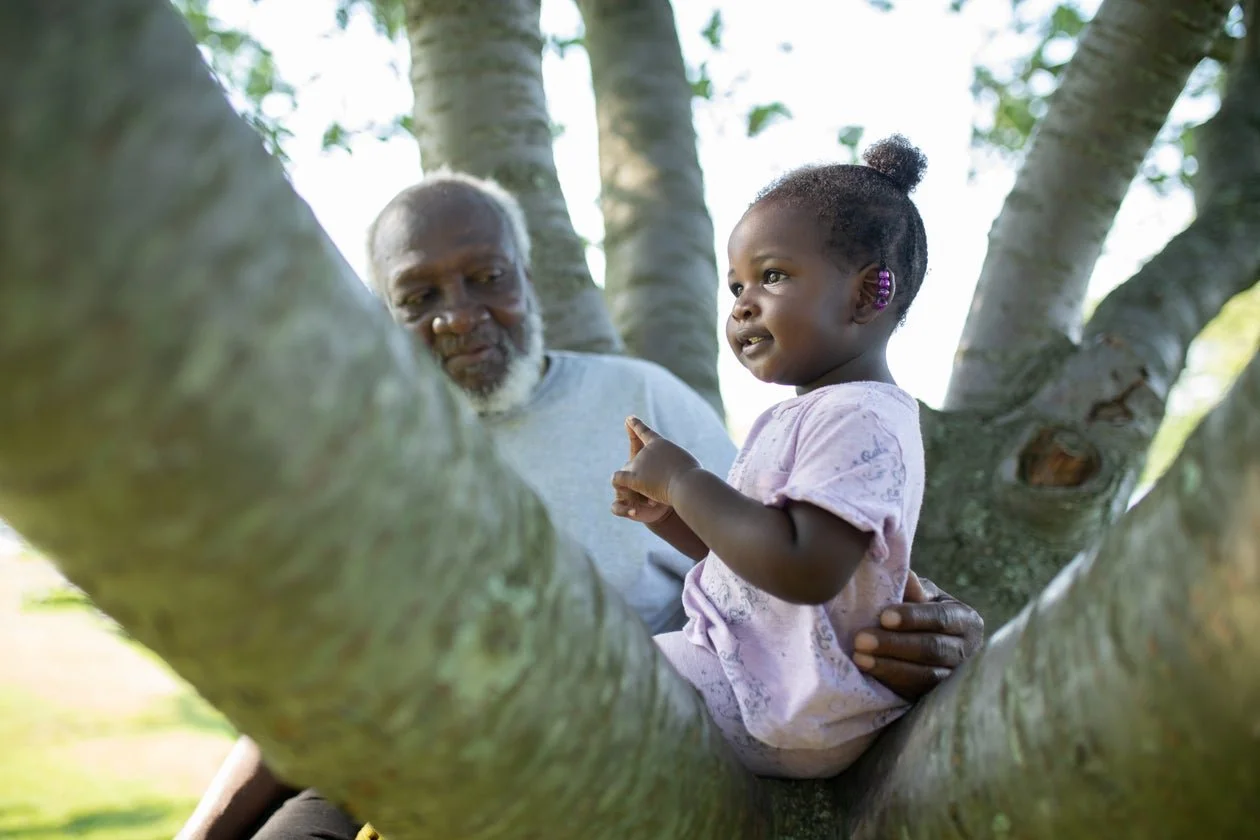
Storytelling shares a story. Storykeeping takes responsibility for it.
What are you afraid of losing?
We use the word storykeeping intentionally. A story can be told once and disappear. Storykeeping asks what happens after someone trusts us enough to share it.
How will it be documented?
What context does it need?
Who has the right to access it?
Where will it live?
How will the storyteller be represented?
And how might that story continue creating meaning long after the original conversation ends?
For us, storykeeping is the intentional practice of listening to, documenting, contextualizing, preserving, and activating lived experience with care.
It recognizes stories as more than content.
Stories are knowledge.
Stories are evidence.
Stories are memory.
Stories are inheritance.
And sometimes, stories are the only record we have of what really happened.
Sometimes the need for storykeeping becomes clear because an anniversary is approaching.
A longtime leader is retiring.
A neighborhood is changing.
An organization is preparing for a transition.
A generation is aging.
A program has shaped lives for decades, but its history has never been documented.
A community knows its experience matters but cannot find itself reflected in the archive.
Or an institution realizes that much of what made it what it is lives primarily in people's memories.
You may be asking:
How do we preserve the stories of the people who built this organization or movement?
What should we document before institutional knowledge disappears?
How can we create an oral history project that is rigorous, ethical, and meaningful?
How do we preserve community memory without extracting from the people who hold it?
How can we capture experiences that have been absent from the official record?
What could these stories teach future generations?
How can an archive become something people actually engage with?
How might stories inform exhibitions, research, public programming, organizational learning, or strategy?
How do we build a project people will feel proud to have contributed to?
You do not need to know exactly what the final product should be.
Sometimes the first question is simply:
What can we not afford to lose?
Our Storykeeping Methodology
Storykeeping is not a single interview or a recording process. It is a practice of stewardship. Our methodology moves through five interconnected stages.
1. Listen
Who needs to be heard?
We begin by understanding the people, communities, histories, and experiences at the center of the project. We identify whose perspectives are essential, whose experiences may have been overlooked, and what conditions will allow people to share honestly. Listening is not simply collecting testimony. It is establishing the trust necessary for people to speak in their own voices.
3. Contextualize
What helps us understand this story?
No experience occurs in isolation. History, place, culture, and institutions all influence how a story is understood. Race, identity, power, policy, family, community, and time shape its meaning. We contextualize individual stories within broader circumstances so that the record captures more than just events. This approach helps future audiences grasp why the story was significant.
5. Activate
What can these stories make possible?
An archive does not have to sit quietly on a shelf. Preserved stories can become the foundation for:
Research
Exhibitions
Podcasts
Documentary projects
Publications
Curriculum
Community conversations
Public programming
2. Document
How do we capture the experience faithfully?
Depending on the project, documentation may include oral history interviews, recorded conversations, story circles, podcasts, written narratives, photographs, archival materials, or other forms of testimony. We design the process around the story, not the other way around. The goal is to preserve depth, complexity, personality, context, and meaning rather than reducing someone's life to a series of usable quotes.
4. Preserve
How will this knowledge survive the moment?
A story isn't truly preserved just by recording it. We consciously consider how to organize, describe, store, share, archive, and ensure long-term access to materials. This process may involve working with libraries, archives, cultural institutions, universities, museums, community groups, or digital repositories. Preservation turns memory into legacy.
Organizational learning
Leadership development
Digital experiences
Anniversary projects
Policy conversations
Strategic planning
Future scholarship
The question isn't just: How do we preserve this? It's also: What could become possible because of our actions?
Storykeeping Without Extraction
People are not content. Their lives are not raw material.
And sharing a story does not mean surrendering dignity, context, or agency.
We approach storykeeping as a relationship of trust.
That means asking questions such as:
Who benefits from this project?
Why are these stories being collected now?
How do storytellers understand the purpose of the project?
What choices do participants have about how their experiences are represented?
Who will have access to what is preserved?
What context must remain attached to the story?
What responsibilities continue after the interview ends?
Consent is not paperwork added to the process.
Care is not something we apply after the recording.
Stewardship begins before the first story is collected.
We believe the people who entrust us with their experiences should be treated with the same seriousness as the stories themselves.
Ways We Can Work Together
Storykeeping partnerships are custom-designed around what you want to preserve and what you hope the collection can become. They may include:
Oral History Projects
Designing and conducting individual interviews that preserve personal experience within a larger historical or community context.
Institutional History Projects
Documenting the people, decisions, turning points, traditions, and experiences that shaped an organization across time.
Community Memory Projects
Preserving the lived history of neighborhoods, professional communities, cultural groups, movements, or communities undergoing transition.
Anniversary & Milestone Projects
Using significant anniversaries, organizational transitions, or public milestones as opportunities to document history and reflect on what has been built.
Story Circles & Collective Listening
Facilitated spaces where participants share memories and experiences in conversation with one another, allowing collective themes and histories to emerge.
Podcast & Audio Archives
Developing story-centered audio projects designed not only for publication, but for preservation, scholarship, and long-term use.
Founder & Leadership Legacy Projects
Capturing the knowledge, memories, lessons, and historical context held by founders, longtime leaders, elders, and community builders before that knowledge leaves with them.
Archival Strategy
Helping organizations determine what should be preserved, how stories should be documented, where materials may ultimately live, and how an archive might be used.
Public Scholarship
Transforming preserved stories into accessible projects that bring community knowledge beyond academic or institutional spaces.
Narrative Research
Analyzing stories across a collection to identify patterns, themes, tensions, histories, and collective insight.
What Can Storykeeping Become?
A storykeeping project does not have to end with a collection of recordings. What is preserved can become:
An Archive
A permanent historical record available to future generations.
Research
A body of qualitative material that can reveal patterns across individual experiences.
Organizational Learning
Institutional memory used to help current leaders understand how an organization arrived at the present moment.
A Publication
Essays, histories, reports, books, or other written work grounded in lived experience.
Public Programming
Panels, community conversations, performances, screenings, workshops, or educational experiences built from the archive.
A Podcast
Voices preserved in an accessible form that allows people to hear history in the words of those who lived it.
Curriculum
Primary-source material that helps learners engage with history through the voices of people who experienced it.
A Digital Experience
Interactive timelines, maps, collections, exhibits, or story-based websites that make preserved knowledge accessible in new ways.
An Exhibition
Stories, images, objects, and memory brought into conversation with a public audience.
The form depends on the project.
The responsibility remains the same:
Preserve what matters without separating the story from the people who made it possible.
The Exit Interview: A Podcast for Black Educators - Storykeeping in Practice
We listened as individual conversations revealed shared experiences of leadership, racial battle fatigue, institutional harm, and reinvention beyond traditional education. Over 90 interviews now form a collective record of the Black educator experience. What began as a podcast evolved into an oral history archive, becoming the first podcast collection preserved by the Schomburg Center for Research in Black Culture. This milestone honors our belief in storykeeping: conversations become evidence, and evidence becomes history accessible to future generations.
From Story to Knowledge
One story helps us understand a person. Many stories placed in conversation can help us understand a moment, a community, or an institution. This is where storykeeping and research meet.
Across a collection, we can begin asking:
What experiences repeat?
What has changed across generations?
What has remained unchanged?
What knowledge exists outside official institutional narratives?
Where do individual memories challenge the historical record?
What has been normalized but rarely documented?
What disappears when people leave?
What do communities remember that institutions have forgotten?
Preservation makes those questions possible. Without the stories, there is nothing left to study.
Where Storykeeping Belongs
Every sector has knowledge it risks losing. We welcome storykeeping partnerships with:
Museums and cultural institutions
Libraries and archives
Foundations and philanthropic organizations
Universities and research centers
Healthcare and public health organizations
Nonprofits and community organizations
Government and public agencies
Arts and media organizations
Professional associations
Schools, districts, and educational organizations
Mission-driven companies
Community groups and historical initiatives
Corporations risk losing decades of institutional wisdom as veteran staff retire.
Healthcare organizations seek to record perspectives of clinicians or populations missing from historical records.
Foundations aim to chronicle the long-term impact and legacy of their supported initiatives.
Museums look to safeguard shared experiences and narratives tied to specific exhibitions or cultural movements.
Nonprofits wish to preserve the memories of original founders and enduring community leaders.
Professional associations focus on charting industry development by capturing member testimonies.
What deserves to be remembered?
Perhaps a whole generation's experiences remain undocumented. Institutional knowledge could be lost as long-term members prepare to depart, or your organization might be nearing a major milestone. Often, a community's heritage is scattered across unorganized boxes, photographs, memories, and personal conversations. You might be starting to realize that without a conscious effort to protect it, this invaluable history could vanish forever. At this stage, defining the exact structure of your archive is unnecessary; the essential first step is simply recognizing that these stories truly matter.
We can begin there.