
Speaking
Some conversations change what people know. The right ones change what they can see.
Dr. Asia Lyons brings research, story, lived experience, and reflection together to create conversations about dignity, institutional life, storykeeping, healing, and liberation.
Drawing from more than two decades in education, qualitative research, public scholarship, podcasting, and healing-centered practice, she helps audiences recognize what may have been difficult to name and consider what becomes possible once they can see it more clearly.
This is not speaking designed simply to deliver information.
It is designed to stay with the room.
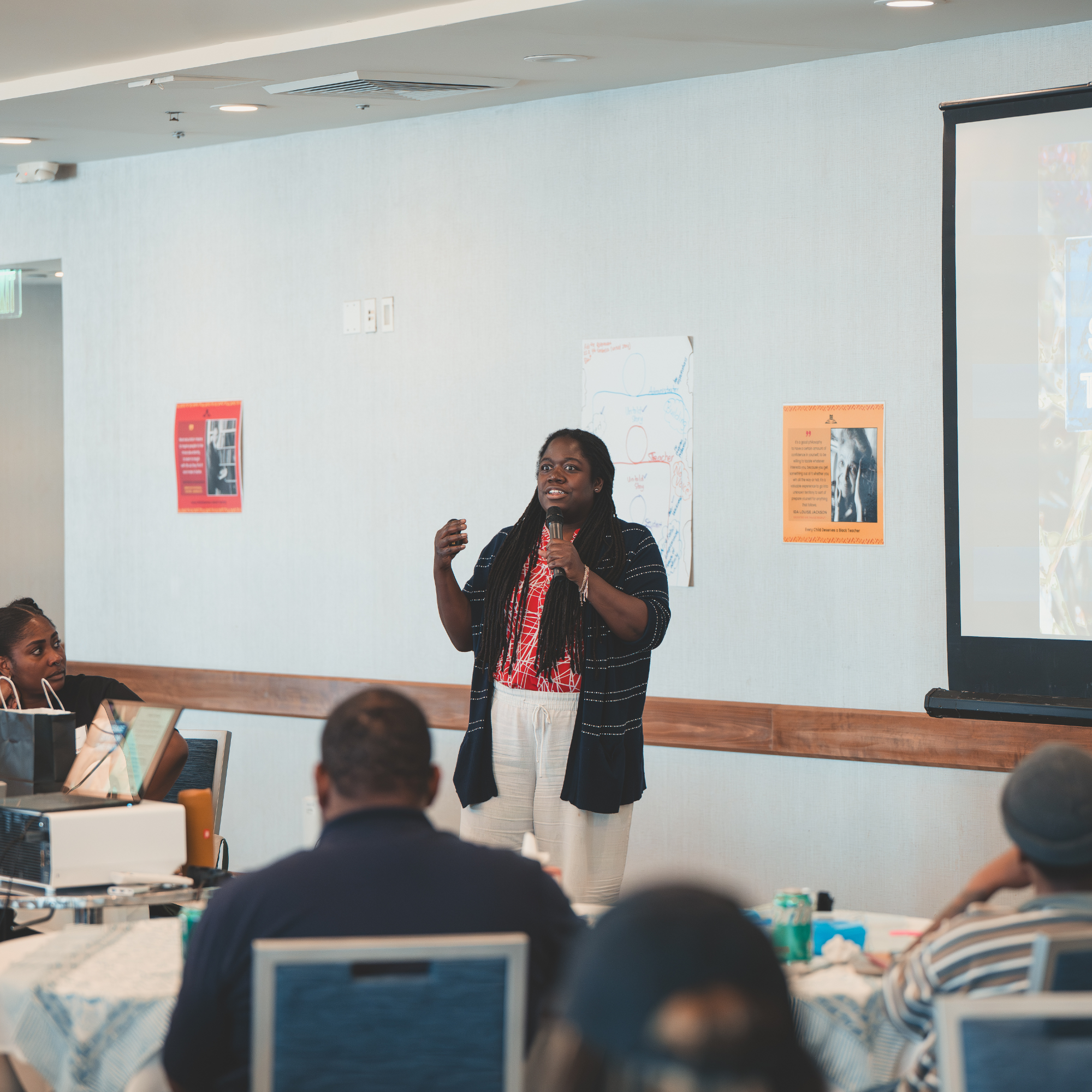
Speaking That Begins With People
A powerful talk does not begin with a slide deck. It begins with the people in the room.
Dr. Asia creates experiences that are intellectually rigorous without losing their humanity. Research provides a foundation. Story makes the ideas tangible. Reflection gives audiences space to locate themselves within the conversation.
The goal is not simply for people to leave knowing more.
It is for them to leave seeing differently by first asking the questions that are important to the people inside the space.:
What are they carrying?
What are they trying to understand?
What has become difficult to name?
Which assumptions are ready to be questioned?
What conversation could become possible if someone gave the room language for it?
Signature Conversations
Each engagement can be tailored to the audience, context, and purpose of the gathering.
Dignity at Work
What happens when people no longer feel fully human inside the institutions they serve?
Burnout, disengagement, turnover, and retention are often treated as workforce problems. The deeper issue may be dignity.
This conversation examines what happens when people feel unheard, undervalued, overused, or disconnected from who they are beyond their roles and what dignity has to do with trust, belonging, organizational culture, and departure.
Beyond Burnout
Racial battle fatigue, institutional harm, and the limits of resilience.
Burnout does not fully explain what many Black professionals experience inside institutions.
Dr. Asia introduces racial battle fatigue as a framework for understanding the cumulative effects of navigating racism and racial stress, then moves the conversation beyond asking people to become more resilient toward examining what institutions continue asking them to endure.
The Stories We Save Shape the Futures We Build
Storykeeping as a practice of memory, knowledge, and liberation.
Stories do not automatically become history. Someone has to decide they are worth keeping.
Drawing from The Exit Interview and its preservation by the Schomburg Center for Research in Black Culture, Dr. Asia explores storykeeping as a responsibility and invites audiences to consider what their institutions, professions, and communities are failing to preserve.
Leaving Is Data
What institutions can learn from the people who decide they have had enough.
Departure tells a story.
Drawing from years of conversations with Black educators who left traditional education, Dr. Asia examines what people reveal once they are free to speak without organizational consequence.
What do people say after leaving that they could not say while inside? What patterns become visible across individual departures? And what responsibility does an institution have when the same stories keep repeating?
A Body of Work Behind the Conversation
Her work includes qualitative research on Black educator experiences and racial battle fatigue, public scholarship examining what happens when educators leave traditional systems, oral history and storykeeping, and the creation of healing and joy-centered experiences.
She is the creator and host of The Exit Interview, an oral history podcast preserving the experiences of Black educators. The collection was selected for preservation by the Schomburg Center for Research in Black Culture, becoming the first podcast collection in the Center's history.
Dr. Asia has shared her work at SXSW EDU, Harvard Graduate School of Education, AERA, National Education Association convenings, universities, conferences, and professional gatherings across the country.
What the Data Cannot Tell You
Why lived experience belongs alongside the numbers.
Organizations can measure what is happening without fully understanding why.
Through qualitative research, deep listening, and community-centered inquiry, this conversation explores what becomes visible when institutions recognize people as knowledge holders and what leaders can learn when they listen beyond traditional metrics.
Podcasting as Public Scholarship
What becomes possible when conversation becomes archive?
A podcast can entertain and inform. It can also document a community, produce knowledge, preserve oral history, and become part of the historical record.
Using The Exit Interview as a case study, Dr. Asia explores podcasting as storykeeping and public scholarship and what becomes possible when we broaden our understanding of where knowledge lives and how it is preserved.
Rest Is Not Preparation for More Labor
Rest so you can return refreshed. Heal so you can perform better. Take care of yourself so you can keep giving.
Dr. Asia challenges this familiar logic and offers another proposition:
People deserve rest, joy, connection, and care because they are human, not because those experiences make them more useful to an institution.
This conversation invites audiences to rethink wellness, productivity, dignity, and what genuine care requires.
Dr. Asia's speaking is grounded in research, practice, and years of listening to people describe what institutions often fail to see.

More Than a Keynote
Keynotes
Thought-provoking talks designed to establish a powerful central idea, challenge assumptions, and give audiences language for conversations that matter.
Interactive Keynotes
Keynote experiences incorporating reflection, audience engagement, storytelling, or facilitated dialogue.
Fireside Conversations
Interview-style conversations that create room for depth, spontaneity, and connection.
Facilitated Conversations
Structured dialogue around complex subjects where the quality of the conversation matters as much as the content.
The right format depends on what you want to make possible in the room.
Workshops
Extended experiences that allow audiences to explore an idea more deeply through learning, reflection, conversation, and practice.
Panels & Moderation
Participation in or facilitation of conversations involving researchers, leaders, practitioners, and community voices.
Live Podcast Conversations
Public interviews or recordings that bring storykeeping, oral history, and audience engagement together in a live setting.
Retreats & Convenings
Custom sessions incorporating speaking, reflection, storykeeping, facilitated dialogue, healing, or collective sensemaking as part of a larger gathering.
What Do You Want to Make Possible in the Room?
You may want your audience to:
Find language for an experience they have struggled to name
Question an assumption that has shaped their work
Understand lived experience beyond the available data
Think differently about dignity, leadership, or organizational culture
Consider whose stories have been excluded from the historical record
Reimagine the relationship between rest, healing, and productivity
Understand racial battle fatigue beyond traditional burnout narratives
Recognize storytelling and oral history as forms of knowledge
Leave with a question they cannot easily put down
A speaking engagement can begin with an existing signature conversation or be thoughtfully adapted around the needs of your gathering.
The most meaningful engagement begins before Dr. Asia takes the stage. We work with event partners to understand the audience, the gathering's larger purpose, and the conversation you want participants to continue after the event ends.
Who These Conversations Are For
Questions of dignity, memory, institutional life, healing, and lived experience cross sectors.
Dr. Asia speaks with audiences from:
Museums, libraries, archives, and cultural institutions
Foundations and philanthropic organizations
Healthcare and public health
Universities and research centers
Nonprofits and community-based organizations
Government and public agencies
Professional associations
Arts, media, and storytelling organizations
Leadership and workplace conferences
Schools, districts, and educational organizations
Mission-driven companies
Affinity groups and professional communities
Different rooms bring different questions. The commitment remains the same: create a conversation that treats the people in the room as thinkers, knowledge holders, and whole human beings.
What Audiences Can Expect
Dr. Asia Lyons' talk doesn't aim to tell the audience what to think. Instead, it gives them space to explore their existing beliefs. Attendees can anticipate experiences that are:
Backed by research but engaging, not overly academic.
Rooted in culture, requiring no translation.
Honest, avoiding manufactured discomfort.
Reflective, yet actively engaging.
Accessible, without oversimplifying complex ideas.
Human-centered, maintaining intellectual depth.
The goal isn't just applause at the end but fostering an ongoing conversation.
Bring the Right Conversation Into the Room.
Whether your gathering needs language for unnamed experiences, your audience is ready to reconsider whose knowledge counts, or your institution is wrestling with dignity, memory, departure, healing, or what deserves to be preserved, tell us what you want to make possible.
We can build the conversation from there.